











Name
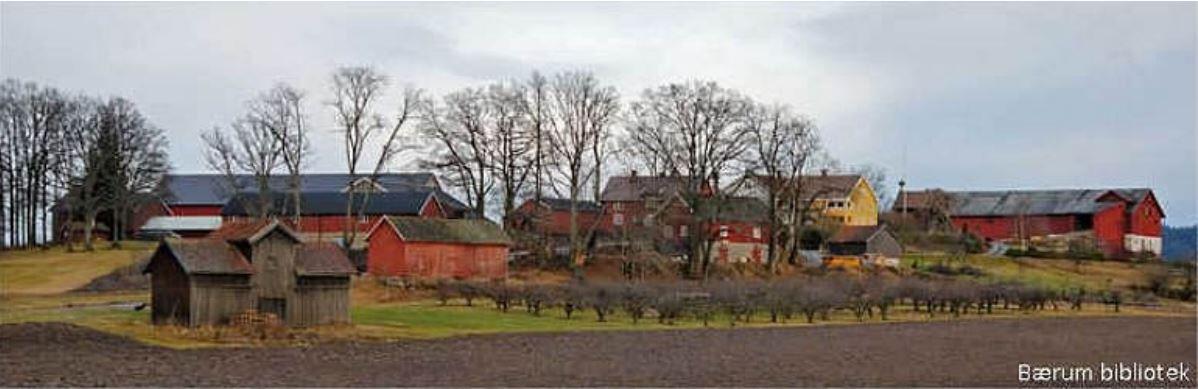
Ringvin probably comes from the fact that the farms are located on a ring-shaped hill. Vin means pasture or meadow. The name is from the early Iron Age, perhaps around the birth of Christ.
History
One of Bærum's oldest farms where discoveries have been made of shaft-hole axes from the Neolithic age and belt stones from the older Iron Age (500 BC - 500 AD). Ringi belonged to the church. The farm was already divided in 1358 according to written documentation, but the houses are located around the same yard. One farm was depopulated during the Black Death. The Ringi family bought both farms in 1661.
In addition to agriculture and forestry, lime production has been great for many hundreds of years. Lime was delivered to Akershus fortress as early as 1558. Three lime kilns have been identified on the farm. The lime kiln was restored in 1981 and 2021 by Asker and Bærum Historielag.
Øvre Ringi
Øvre Ringi has been owned by the Østensen family since 1661 and has been passed down from father to son until today. Several of the Østensen farmers have been sheriffs for Bærum and later for Asker. In 1988, the family changed its name to Ringi. Jon Østen Ringi is the 10th generation on the farm.
Today's management
From having been a grain farm with some potatoes and apples, today's owners started with self-picking of corn in 1985 and apple pressing in 1995. The Ringi products are sold in many places in Norway in grocery stores and in restaurants as an alcohol-free alternative.
Nedre Ringi
Nedre Ringi has had several changes of ownership. Formerly traditional farming and forestry with locomobile steam saws for a period. From 1940 milk production, from 1960 meat production, later grain production. Today, the farm is owned by Nils Klaveness. The land is leased to Jan Østensen at Butterud for grain cultivation.