













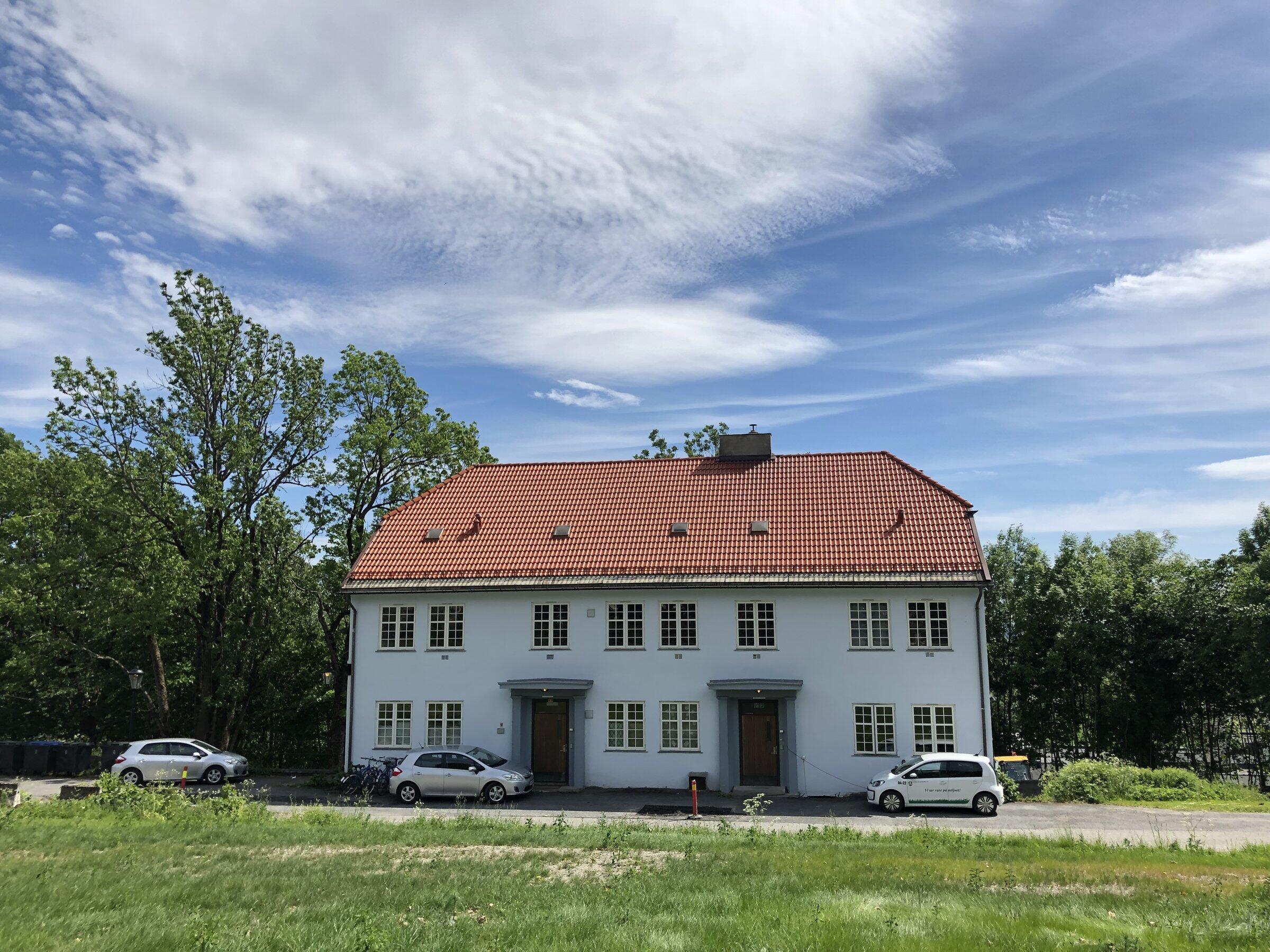

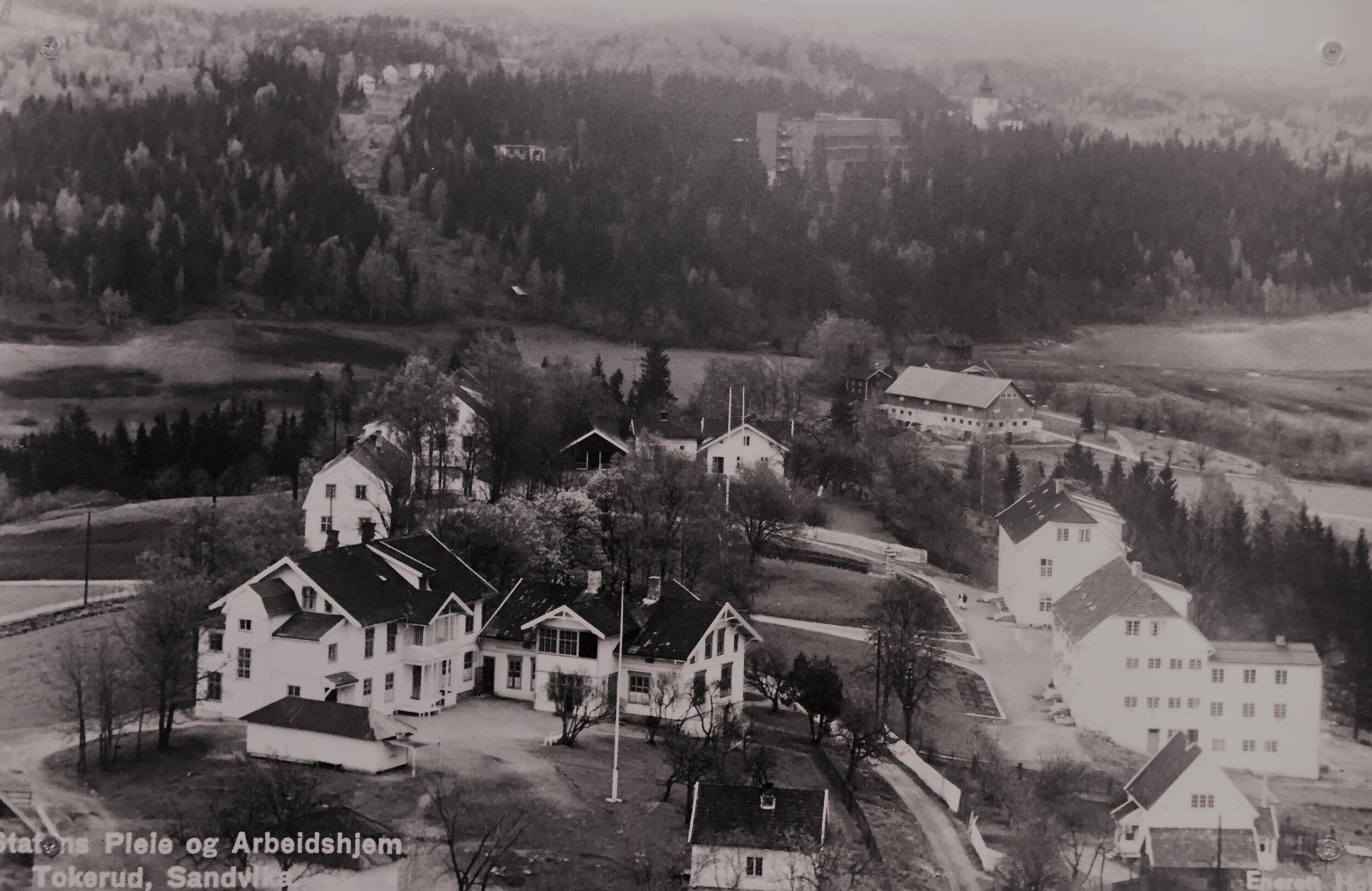
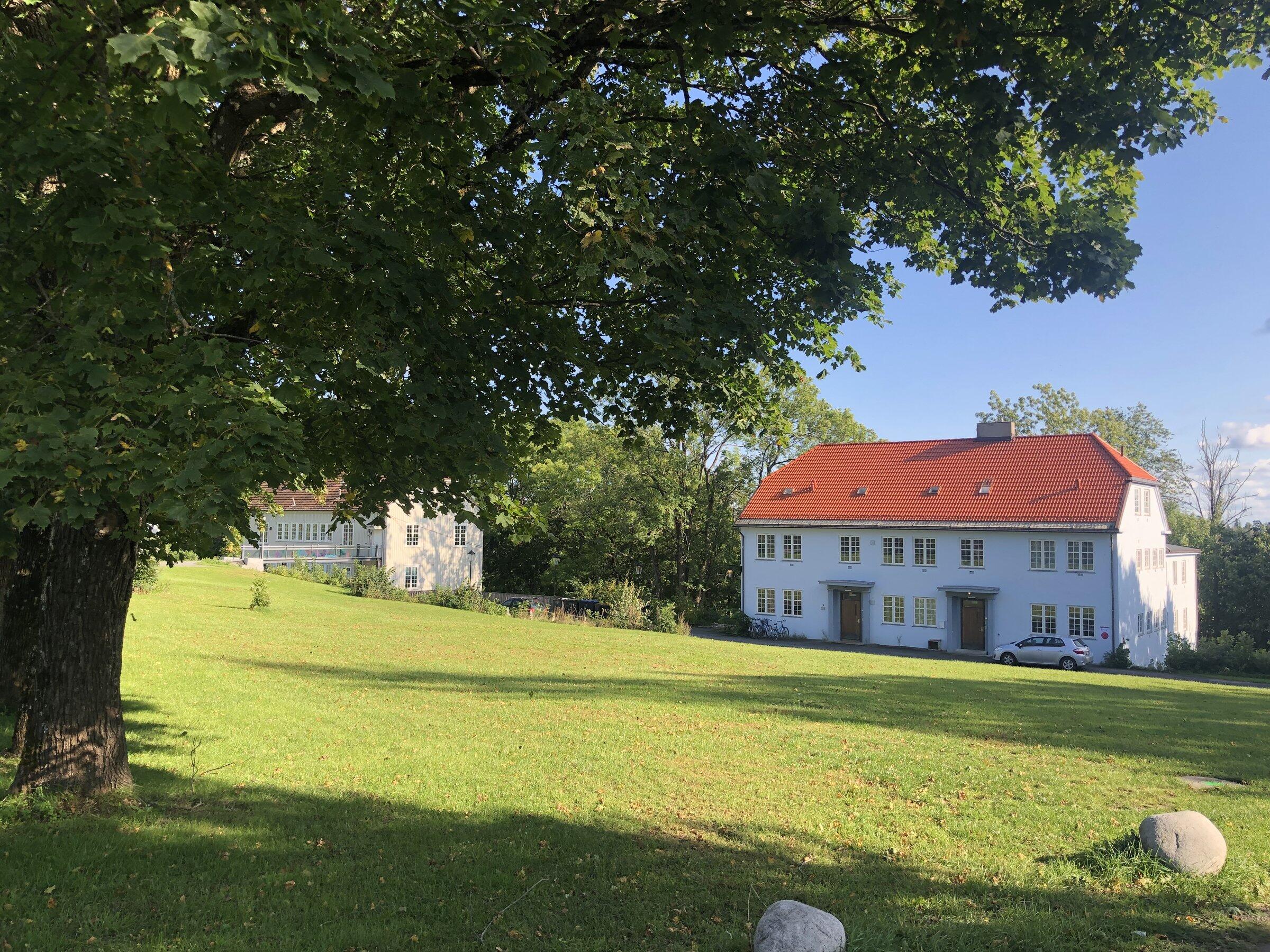

In 1929, the head of Emma Hjorths Hjem (EHH) at the time, Jens Hole, submitted his first application to erect a house at EHH for older, troubled boys. A year and a half before, he had started raising funds for this purpose. His application was denied. In the winter of 1931–1932, he had the farm workers dig out a plot and build a foundation. The building eventually got a roof. In 1933, the ministry asked where he would find the funds to finish the building. He responded as follows: "They will come, of that I have no doubt. For God, who hitherto has worked in our favour and allowed the work to succeed with limited funds, surely will not let these efforts have been in vain." He found the funds and the building, named Borgen, was completed in 1934.
For many years, the building was used as a home for troubled men. Former staff members reported deplorable conditions in the basement, where many spent all their time. Accounts from former residents also include violent incidents and punishments.
Borgen was eventually acquired by the Emma Hjorth school, which was founded by Dr. Ole B. Munch in 1959. He was passionate about the "mentally deficient" getting an education, and the residents at EHH learned to read and write. A recreation supervisor was hired around 1960, and a teacher by the name of Helge Morset was hired in 1961.
The third floor at Borgen was used to house civil workers until the institution was closed in 1996 as a result of the Deinstitutionalization Reform. The Municipality of Bærum currently rents out the buildings and studio spaces to artists.
The security cell and the dungeon
Excerpt from Om hundre år er allting glemt? Emma Hjorths Hjems historie 1898-1998 (1998) by Halvor Fjermeros, p. 46-48.
Borgen and its basement
"(...) Anne Aarsland started working at Borgen in 1951, after having worked at Småbarnshjemmet since 1947. I spoke to her in the spring of 1998. She remembers that the highest clothing number was 72; they all had numbered clothing, and there were 72 male patients, distributed across Borgen’s three floors. The second floor was where "the fit ones" lived, 24 of the most well-adapted, those who could, if necessary, manage without help for an entire day (...). Down in the basement was the "corridor" for the most difficult boys, where, among other things, there were two bare cells with plaster walls. That’s where the ones who acted out ended up, but never without the doctor’s approval. There was an aura of fear surrounding the infamous Borgen basement, and the most unruly boys constantly lived with the threat of being thrown "in the cell". A less severe form of punishment was the straitjacket, or the frequently used boiler suit with a locked rear strap. Far more terrifying was the fear of castration. This type of surgery was often associated with uncontrollable sexuality or specific sexual "excesses". Anne Aarsland remembers three times from the decade after 1951 where boys returned from surgery at Bærum Hospital, but she puts no stock in "gossip" that Munch performed the surgeries personally in his office.
"After my first shift at Borgen, I came home to my wife and said I could not stand being there," said Kjell Stranden, who started working there as a carer in the summer of 1963. But he describes how quickly one got "corrupted" — used to the conditions and tough enough to survive among 70 male patients at Borgen, including the "dungeon" in the Borgen basement. "I was put straight to work the day I started. I got no training at all. We weren’t encouraged to hit anybody, but at the same time, we were warned that some patients were dangerous and that some probably would challenge the new nurse." When one of the boys did just that, I was so highly strung that I threw him into a wall and said that was the last time he tried anything with me," said Stranden, who spoke to me in 1998. (...) "The strange thing is, some of the ones described as dangerous in 1963, I would run into down at the shop in Slependen with young girls as their carers just a few years later. There were many myths about the patients, which they felt compelled to live up to, and which their carers were trained to handle in specific ways. This radically changed after the move to the new 80-man men’s pavillion a few years after I started working at Borgen,” said Stranden.